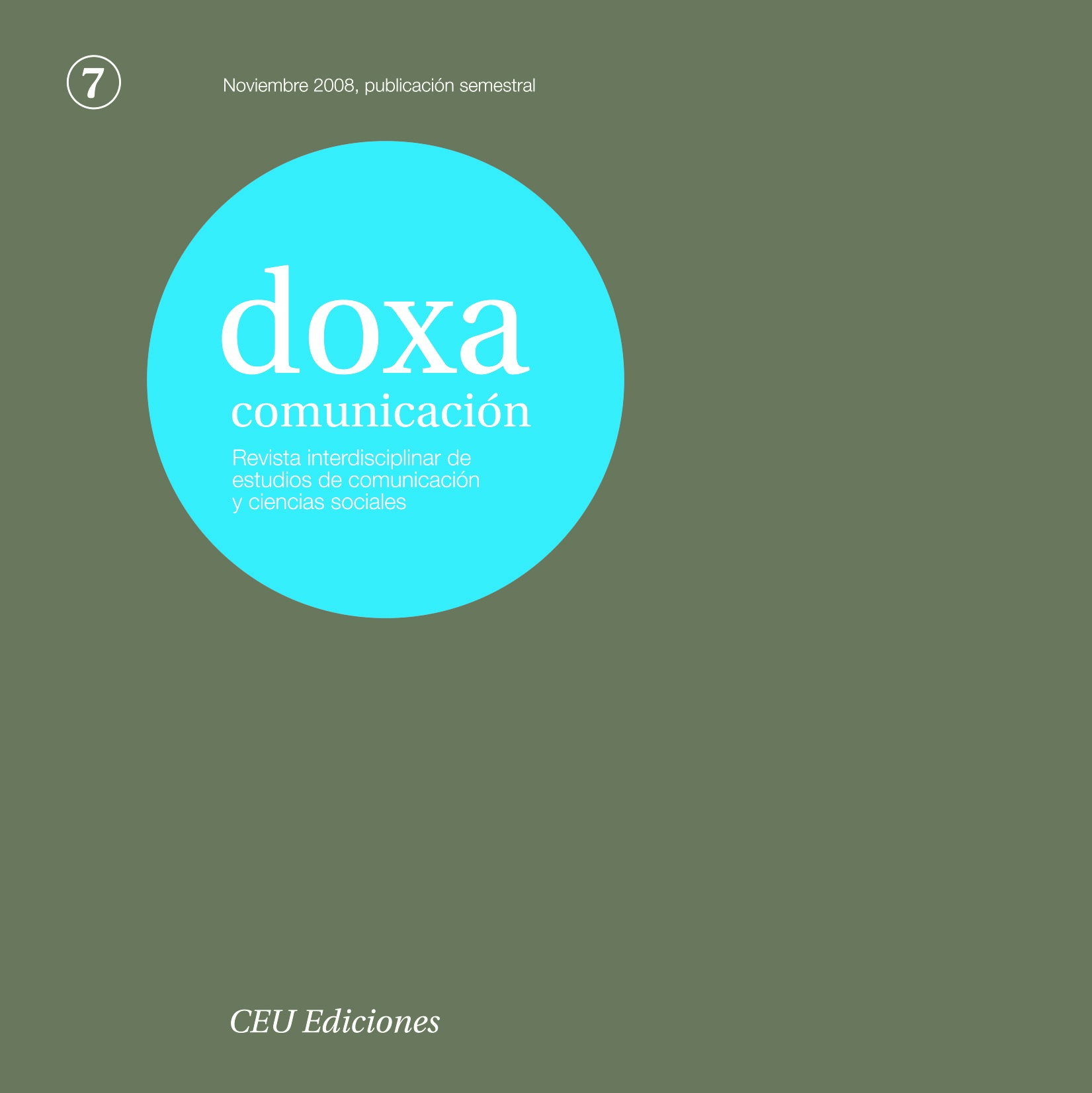
Professional magazines specialized in Advertising in Spain: Results of a Delphi study
DOI:
https://doi.org/10.31921/doxacom.n7a4Keywords:
Advertising, professional magazines, publishing business, tendencies, qualitative investigation, Delphi methodAbstract
In this article there are gathered the results of a qualitative research developed in 2007 on the market of the professional magazines specialized in advertising in Spain. The main purpose was to carry out a descriptive analysis of the current situation and also a prospective analysis in order to foresee the future of these publications. The research methodology used was the Delphi method. The conclusions refer to questions like the strengths and weaknesses of these magazines, their principal competitors, how they use the new technologies and the future trends related to their development.
Downloads
Global Statistics ℹ️
|
468
Views
|
177
Downloads
|
|
645
Total
|
|
References
Báez y Pérez de Tudela, J. (2007): Investigación cualitativa, Madrid: ESIC Editorial.
Berganza Conde, R. et al. (2005): Investigar en comunicación, Madrid: McGraw-Hill/Interamericana de España.
Gaitán Moya, J. A. y Piñuel Raigada, J. L. (1998): Técnicas de investigación de comunicación social, Madrid: Editorial Síntesis.
Landeta, J. (2002): El método Delphi. Una técnica de previsión del futuro, Barcelona: Editorial Ariel.
Piñuel Raigada, J. L. y Gaitán Moya, J. A. (1999): Metodología general. Conocimiento científico e investigación en la comunicación social, Madrid: Editorial Síntesis.
Wimmer, R. D. y Dominick, J. R. (1996): La investigación científica de los medios de comunicación. Una introducción a sus métodos, Barcelona: Editorial Bosch.
Downloads
Published
Issue
Section
License
Copyright (c) 2008 http://creativecommons.org/licenses/by-nc/4.0

This work is licensed under a Creative Commons Attribution-NonCommercial 4.0 International License.
The authors retain their copyright and grant the journal the right of first publication of their work, which will be simultaneously subject to the Creative Commons License, Attribution-NonCommercial, International License (CC BY-NC 4.0). The scientific community is free to share, copy, and redistribute the material in any medium or format, and to remix, transform, and build upon that material under the following terms: Proper credit must be given (journal, authors, URL/DOI), and it is not used for commercial purposes.
How to Cite