Thirteen Observant Gazes to Bare the Essence of Spaces and Memory
Keywords:
photography, territory, cultural consumption, photographic essay, ethnographyAbstract
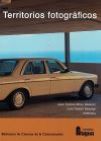
Photographic Territories proposes a provocative, interdisciplinary, and heterogeneous journey through contemporary ways of observing, understanding, and navigating physical and symbolic spaces through photography. This photographic essay features a carefully designed and colorful presentation with thirteen visual chapters that explore urban landscapes, intimacy, and family photographs, as well as artistic experimentation and the visual construction of the present and memory. The book is published in print and edited by Juan Carlos Alfeo Álvarez, PhD in Audiovisual Communication, professor and researcher in film and photography, as well as a passionate photographer; and Luis Deltell Escolar, professor and researcher in image, film, and technology, and an award-winning director of documentaries and fiction—both affiliated with the Complutense University of Madrid. An academic photo-essay that claims photography as a central document and as an ethnographic and autoethnographic perspective on interior and exterior spaces, and their connections to consumption, art, culture, and identity.
Downloads
Global Statistics ℹ️
|
285
Views
|
167
Downloads
|
|
452
Total
|
|
References
Augé, M. (1992). Los no lugares: Espacios del anonimato. Gedisa.
Baudrillard, J. (2009). La sociedad de consumo: Sus mitos, sus estructuras. Siglo XXI.
Benjamin, W. (2007). La obra de arte en la época de su reproductibilidad técnica. Abada Editores.
Berger, J. (1972). Modos de ver. Gustavo Gili.
Lipovetsky, G., & Serroy, J. (2009). La pantalla global: Cultura mediática y cine en la era hipermoderna. Anagrama.
Reynolds, S. (2012). Retromanía: La adicción del pop a su propio pasado. Caja Negra Editora.
Downloads
Published
Issue
Section
License
Copyright (c) 2025 Jorge Rodríguez-Moreno

This work is licensed under a Creative Commons Attribution-NonCommercial 4.0 International License.
The authors retain their copyright and grant the journal the right of first publication of their work, which will be simultaneously subject to the Creative Commons License, Attribution-NonCommercial, International License (CC BY-NC 4.0). The scientific community is free to share, copy, and redistribute the material in any medium or format, and to remix, transform, and build upon that material under the following terms: Proper credit must be given (journal, authors, URL/DOI), and it is not used for commercial purposes.